
Jalan Pramuka Jakarta: Market, History and a Main Capital Route
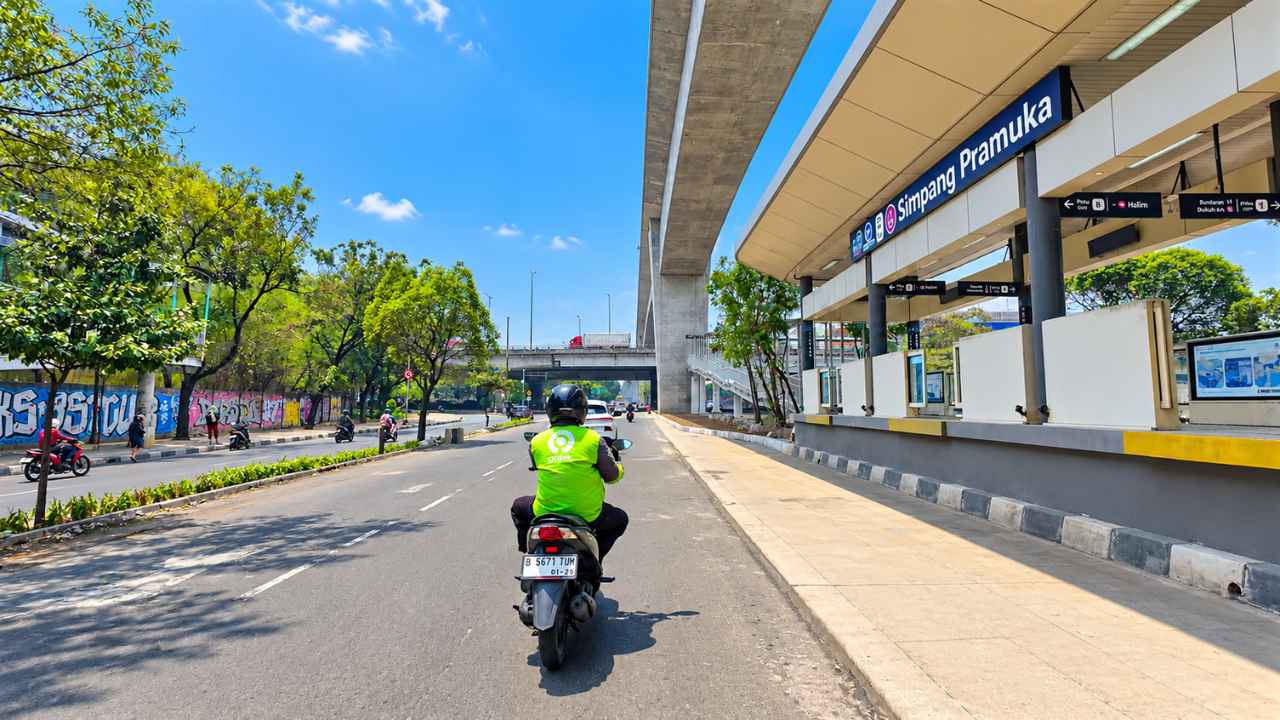
Jalan Pramuka is one of the arterial roads that link Central Jakarta with East Jakarta. Its roughly 3.2 kilometres run from Pegangsaan in Menteng to Rawasari in Cempaka Putih, ending where the corridor meets Jalan Jenderal Ahmad Yani, the road everyone here calls the Bypass. Along that one line, housing, shops, offices, health services, markets and public transport share the same strip of asphalt.
Two things give the road its name recognition: Pasar Pramuka, the long-standing centre for medicines and health equipment, and Pasar Burung Pramuka, one of the city's best-known ornamental bird markets. Between them sits a working corridor that stays busy from the morning commute until the shops close.
The clip below is a street-view ride that begins on this corridor. The player opens at 2:00, where the Pramuka stretch starts.
Key facts at a glance
- Where: Pegangsaan (Menteng) to Rawasari (Cempaka Putih), Central Jakarta, ending near Jalan Jenderal Ahmad Yani.
- Length: about 3.2 km of urban arterial road.
- Known for: Pasar Pramuka (medicines and health equipment) and Pasar Burung Pramuka (ornamental birds).
- Public transport: Transjakarta Koridor 4, with the Pramuka BPKP, Pramuka LIA, Utan Kayu, Pasar Genjing and Matraman stops; the LRT Jakarta Fase 1B project (Velodrome–Manggarai) is being developed across the same area.
- On and near the route: restaurants and warungs, coffee shops, minimarkets, fuel stations, banks and ATMs, and hotels.
- Why the name: members of the Gerakan Pramuka helped build the road in the 1960s.
Where Jalan Pramuka runs
The road begins in Pegangsaan, in the Menteng district, and runs east across the Senen area before it reaches Rawasari in Cempaka Putih and the junction with Jalan Jenderal Ahmad Yani. On the way it touches neighbourhoods that Jakarta riders know well: Menteng and Pegangsaan at the western end, Paseban and Utan Kayu in the middle, and Rawasari towards the east.
On its western side the corridor connects towards Jalan Proklamasi and Manggarai; on its eastern side it opens onto Jalan Jenderal Ahmad Yani, one of the main links between East Jakarta and the north of the city. That position is why the road carries so much traffic: it is less a destination street than a way through, and the trade along it grew around the people passing by.
How the road got its name
The name is not decorative. The road was built in the 1960s with contributions from members of the Gerakan Pramuka, who worked in shifts to speed the job up so that it would be finished in time for Hari Pramuka on 14 August 1965. The road was named in recognition of that work.
It is a small piece of city history: part of the corridor that carries Jakarta traffic today was built by young people in uniform, and the name has stayed in use ever since.
Pasar Pramuka: medical trade and the bird market
One market complex, two very different kinds of trade. Both sit along the same corridor, and both are the reason many people come to this road in the first place.
Pasar Pramuka, the health trade centre
Pasar Pramuka is one of Jakarta's long-established centres for medicines and health equipment. The shops around the main road stock medical supplies: examination and monitoring devices, nursing and care equipment, and a wide range of other health products. The trade runs through rows of kiosks and shopfronts set just off the carriageway, so buyers - clinics, pharmacies and families alike - can work their way from shop to shop on foot.
Because the trade sits on a main road rather than in a purpose-built mall, riders usually see the market as a wall of small shops and parked vehicles. Parking is tightest where the medical shops cluster.
Pasar Burung Pramuka
The other half of the market's identity is Pasar Burung Pramuka, one of the best-known ornamental bird markets in Jakarta and a long-standing destination for bird keepers. Caged songbirds, cages and aviaries, feed and care supplies are all traded here, and the market has been part of the city's traditional trade for decades.
For a rider it is the part of the corridor with the most distinctive street life: crates, cages and carriers in and out of vans, and a crowd that moves at walking pace. It also marks this road out from the other main roads of Central Jakarta.
Offices and business along the road
The corridor is not only markets. Office blocks, shophouses, places of business and public service offices line the road, and commercial buildings stand directly beside residential lanes.
- Graha Pramuka on Jalan Pramuka Raya is one of the buildings commonly associated with the area.
- Graha BNPB (Jalan Pramuka No. 38) has a bank office on the ground floor.
- Askrida Tower (Jalan Pramuka Raya Kav. 151) houses a Bank Mandiri branch, a unit of Mandiri Investama Sejahtera and a restaurant.
That mix - trade, offices, services and housing on one line - is what makes Jalan Pramuka an urban corridor rather than a single-purpose street.
Public transport on Jalan Pramuka
Jalan Pramuka has good public transport access, which is one reason it stays busy all day.
Transjakarta corridor 4
The road is served by Transjakarta Koridor 4, which connects the Pulo Gadung area with Dukuh Atas. The stops that serve the corridor and its surroundings include:
- Halte Pramuka BPKP
- Halte Pramuka LIA
- Halte Utan Kayu
- Halte Pasar Genjing
- Halte Matraman
Those stops put trade areas, offices, housing and other connections within reach, and the dedicated bus lane down the middle of the road is one of the defining features of the traffic scene.
LRT Jakarta and the rail connection
The LRT Jakarta Fase 1B Velodrome–Manggarai project is the other piece of the area's transport story. It is designed to strengthen the link between Rawamangun, Pramuka, Matraman and Manggarai and to offer an alternative to private vehicles. The ride photo at the top of this article was taken at Simpang Pramuka, where an elevated structure already spans the corridor.
Between the busway and the rail extension, Jalan Pramuka is being asked to do two jobs at once: carry local traffic and act as a connection point between modes.
Where to eat near the route
Food is one of the reasons the corridor is never quiet. The list below comes from a search along the route, so the places sit on Jalan Pramuka or a short way off it.
- On the corridor: Nasi Begadang Kayana (Jalan Pramuka No. 62), Pondok Marenten (Jalan Pramuka No. 64), Resto Gurih in Askrida Tower (Jalan Pramuka No. 151) and Warteg 2 Saudara (Jalan Pramuka Jayasari Gg. I).
- Padang kitchens near the route: de Belango, RM Pondok Passo, Rumah Makan Minang Sepakat and Rumah Makan Padang Salero Anda.
- Rice, noodle and satay warungs: Nasi Bebek Holil and Rumah Makan Cahaya Baru (Utan Kayu Raya), Warung Nasi Bu Atun (Matraman Luar), Warung Makan Pasundan (Kayu Manis), Warung Soto Agfa (Waringin), Sate Madura Cah M. Basir and Warung Kuliner Pengayoman (Pengayoman), and Bubur Ayam Kehakiman (Pengayoman).
- Snacks and small plates: Pondok Dimsum Utan Kayu Utara, Nasi Uduk Mbak Vera (Kayu Manis Barat), Warung Sate Pak Yadi (Kayu Manis Utara), Nyiur Melambai (Manado, Gempol-Malang) and Gitu Deh Seafood (Mangga).
- Bigger rooms near the road: Munik Restoran, Handayani Prima, Syailendra Restaurant and Dapur Solo Matraman on Matraman Raya, Pizza Hut on Matraman Raya, Imperial Kitchen & Dimsum and Open Restaurant at the Megaria complex.
A working note: because the list came from a route-wide search rather than a walk-past check, treat it as a starting point. Most places are on or just off the corridor, and a few need a short detour, so it is worth checking the map before you turn off.
Coffee shops near the route
Coffee has grown alongside the food, from national chains to small neighbourhood kedai kopi.
- On and around the corridor: ITSMe Unique Coffee (Jalan Pramuka Jati), Watt Coffee, Kopi Kenangan at Green Pramuka Square and its container outlet on Utan Kayu Raya, and Alur Kopi Rawasari.
- Utan Kayu and Pengayoman: Chester Coffee, Kopi JJ, Warung Kopi & Soto Simpang Tiga.
- Matraman Raya: Kopi Kokas, Nilai Kopi, Jas Kopi and Point Cafe Matraman.
- Nearby streets: Kontraks Coffeeslowbar and Kopi Cargo (Galur Sari), Kopi Dari Hati (Salemba Bluntas), DIA'S Kopi (Kesatrian), Kopi Manji (Kayu Manis) and Kopi Kemuning.
- On the forecourt: Tomoro Coffee at the SPBU Pramuka - a fuel stop and a coffee in one.
Minimarkets and everyday needs
The corridor is well covered for the small, late stops a rider makes: water, phone credit, a snack or a rain poncho.
- On the corridor: Indomaret Pramuka (Jalan Pramuka Raya No. 55/129, Paseban, Senen), S Mart (Jalan Pramuka No. 22D) and Bright Pramuka (Jalan Utan Kayu Raya No. 18A).
- Utan Kayu: Indomaret Utan Kayu 2 and Indomaret Utan Kayu 75, Indomaret T004 Fresh and Alfamidi Super.
- Around the area: FamilyMart Menteng Square on Matraman, Alfamart Balai Rakyat, Alfamart Kramat Asem and Alfamart Rawamangun.
Fuel stations on and near the road
Fuel is easy to find here, which matters on a corridor that carries so much traffic.
- SPBU Coco Pramuka 31.131.01, Jalan Pramuka No. 13 - the station with ATMs on site (BCA and CIMB Niaga).
- SPBU Pertamina 34.104.02, Jalan Pramuka No. 5.
- SPBU Pertamina 34.105.01, Jalan Pramuka No. 63.
- Nearby: the Matraman Raya stations (SPBU Pertamina 34.131.02, 34.131.03 and 34.131.04) and the stations on Jalan Jenderal Ahmad Yani towards Rawamangun.
One of the Pramuka stations also carries a Tomoro Coffee outlet, so a fuel stop can double as a break.
Banks, hotels and other services
Everyday services follow the trade along the corridor.
- Banking on the road: bank bjb Kantor Cabang Pembantu Pramuka (Jalan Pramuka No. 10), Bank BRI KCP Pramuka (Jalan Pramuka No. A 480), Bank BRI KCP BPKP (Jalan Pramuka No. 33), Bank Mandiri KCP Jakarta Pramuka in Askrida Tower (Jalan Pramuka Raya Kav. 151), Bank DKI Kantor Kas Pasar Pramuka (Jalan Pramuka No. 135) and Bank BRI Kantor Kas BNPB in Graha BNPB (Jalan Pramuka No. 38).
- ATMs: BNI, Bukopin, Mandiri and BJB machines along Jalan Pramuka, plus the BCA and CIMB Niaga ATMs at the Coco station.
- Staying over: Eva Hotel (Jalan Pramuka No. 26), Green Pramuka City, OYO 1229 DC Hotel Pramuka and Super OYO 1868 J&B Room Pramuka, with DC Hotel Utan Kayu, Utan Kayu Residence, D'Paragon Matraman and Orchid Health Centre - Hotel Mega Matra a short ride away.
Traffic and what the corridor feels like
As an urban arterial road, Jalan Pramuka carries a heavy volume of vehicles: motorcycles, private cars, public transport, delivery and logistics vehicles, and Transjakarta buses in their own lane.
The pressure points are the busy hours, morning and late afternoon, especially around the larger junctions and the trade areas - the turn towards Jalan Matraman Raya, the Pasar Pramuka area, and the meeting with Jalan Jenderal Ahmad Yani. Vehicles entering and leaving shops, offices and neighbourhood lanes add to it, and a single car waiting to turn can hold up a whole lane.
Even so, the road remains one of the important alternatives for travel between Central and East Jakarta. Riding it in the quieter hours shows a different street: old buildings next to new office blocks, trees along the verge, the bus lane down the middle, and the market trade doing its rounds.
Notes for riders
- Plan around the peaks. Morning and late-afternoon traffic is the heaviest, and the junctions towards Matraman Raya and Jenderal Ahmad Yani are where it slows first.
- Keep out of the busway lane. The Transjakarta lane runs down the middle of the corridor; crossing it needs a proper gap, not a shortcut.
- Expect market traffic at Pasar Pramuka. Loading, parking and pedestrians around the market mean low speed, not overtaking.
- Watch the shop frontages. Cars and motorcycles pull in and out constantly, and a vehicle waiting to turn can block the whole lane.
- Fuel early if you are heading further. There are stations on the road, but the forecourts fill up at peak hours.
- Stay visible. Motorcycles, cars, buses and heavier vehicles share the road all day, so keep your lights on and hold your position.
Frequently asked questions
- Where is Jalan Pramuka?
- It runs through Central Jakarta, from Pegangsaan in Menteng east to Rawasari in Cempaka Putih, ending near the junction with Jalan Jenderal Ahmad Yani.
- What is Jalan Pramuka known for?
- Pasar Pramuka, a long-standing centre for medicines and health equipment, and Pasar Burung Pramuka, one of the city's best-known ornamental bird markets.
- Why is the road called Pramuka?
- Members of the Gerakan Pramuka helped build it in the 1960s, working in shifts so the road could be finished before Hari Pramuka on 14 August 1965, and it was named in recognition of that work.
- How long is Jalan Pramuka?
- About 3.2 kilometres, which is why it works as a through route between Central and East Jakarta rather than a short local street.
- Is there public transport?
- Yes. Transjakarta Koridor 4 serves the corridor through the Pramuka BPKP, Pramuka LIA, Utan Kayu, Pasar Genjing and Matraman stops, and the LRT Jakarta Fase 1B project (Velodrome-Manggarai) is being developed across the same area.
- Are there places to eat, refuel and stay near the road?
- All three. Restaurants, warungs and coffee shops run along the corridor and the streets just off it, fuel stations sit on Jalan Pramuka and nearby Matraman Raya, and hotels range from budget rooms to larger hotels in the surrounding districts.
Seen from the saddle, Jalan Pramuka is a road of two halves: a market corridor with a long history and a working artery that Jakarta uses all day. The medical trade and the bird market give it an identity; the traffic gives it its rhythm.
For more route notes and street stories, browse the Rider Street View blog.
Tags: Jakarta · Jakarta Pusat · Jakarta Timur · Jalan Pramuka · Pasar Pramuka · Pasar Burung Pramuka · Matraman · Utan Kayu · Rawasari
Discussion
Share what you know about this route. Comments are published straight away, and links are not allowed — write the name of a place instead of a web address.
Loading the discussion…